Multidrone Technique
This website is heavily catered to the didgeridoo world, but in order to explain this technique, there are a lot of cross overs into the world of brass instruments. I will do my best to explain things in a way that makes sense to both worlds.
History and Explanation.
I first discovered what I now call the Multidrone Technique in 2008. Multidrone involves using your lips to vibrate and sustain frequencies below the fundamental (basic drone) note of a didgeridoo. A larger mouthpiece is required to play these lower tones and you can read more about that on the Multidrone Didgeridoo page. This technique is similar to playing what brass players refer to as a pedal tone or false tones, except the embouchure is different. The embouchure required to play Multidrone has your lips inverted, meaning the lips are rolled out so that the main contact point creating the vibration is the inner wet part of your lip (nothing to do with my initials and brand W.E.T, but it’s an ironic overlap). This makes it possible to circular breathe in the low range and maintain the exaggerated high harmonic sound that didgeridoo is known for.
Originally I called the technique The Drop Octave. This was the obvious name used to describe the first low drone that I discovered one-octave below the fundamental drone. The pedal tone is usually used to describe the lowest playable note in the harmonic series of an instrument. This could mean that the “Drop Octave” note is actually the real fundamental drone, and that most didgeridoo players are playing the second harmonic when they refer to the fundamental. For the purpose of this article, we will continue referring to the normal drone that didgeridoo is known for, as the fundamental drone.
As early Multidrone exploration progressed, I discovered that it was possible to play several notes between the “Drop Octave” and the “fundamental”, and that these were related to the higher notes in the “trumpet” range (higher playable notes in the harmonic series, above the fundamental drone). This discovery of more drone notes in 2009 is what lead to the new name “Multidrone” and the more specific baseball-bat-like shape of Multidrone instruments. That shape helps position these higher notes in such a way that enhances the playable drone notes that sit below the fundamental.
Basically, any note that exists in the harmonic series of an instrument can be replicated throughout the entire range of that instrument. In Didge-World language, this means that if your didge is in the key of D and your first and second “trumpet” are in the key of B and F (just random notes as an example,) then you will be able to play a B and F drone, below your fundamental D.
Dan Flynn & False Tones
In 2012 I met the infamous Dan Flynn and his computer-aided-design didgeridoos. Dan initially reached out to me to ask questions about my mouthpiece design because he noticed that I was exploring something similar to what he was, but in a lower range. So Dan and his van came and lived at the Mob/Wet Shop for several months. During this time I learned that we were exploring the same thing, except Dan was exploring the “extra notes” above the drone, and I below the drone. I did not realize it was possible to control these extra notes above the drone and he did not realize it was possible below the drone. Maybe we both would have discovered this in time, but thankfully we had each other to save that time.
The “extra notes” or in-between-notes above the drone, are more easily referred to as False Tones. I learned that the term “false tones” from the brass world, could also describe what I was playing below the normal drone.
Dan deepened my understanding of the actual physics and terminology from the brass world of what we were both exploring, and showed me that it was possible to play “Multidrone”, or extra notes, above the drone as well. He ended up adopting my mouthpiece design to reach below the drone, and now adds it to his computer designed instruments.
Understanding the link between our two explorations made it clear that it would be possible to play an even greater number of notes on the didgeridoo. The range is basically limited to your understanding of your instruments harmonic series, and the strength of your lips.
What?
Basically any note in the harmonic series can be duplicated one, two or three octaves(or more if you have lips of steel) above or below where that note naturally resonates. I’ve heard Dan describe it as “shadow notes”. It is like each note casts a shadow of itself in the octaves below (and above). These shadow notes are far from easy to play, but the natural notes in the harmonic series can be positioned to make them easier.
For example, imagine you have a didge that is in the key of E and the progression of “trumpets” (playable notes in the harmonic series above the drone) is as follows B, C, A, B, B. Because three of your playable harmonics are in the key of B (in different octaves), the B not will resonate very strongly in throughout the entire playable range of the instrument. This will make the B drone below the fundamental drone a lot easier to play. It will also make it easier to play and find a B note false-tone between the C and A second and third “trumpets”. Tuning your instruments to repeat certain notes in the harmonic series increases that notes Acoustic Impedance throughout the enitre range. The more impedance a certain note has in an instrument, the easier it is to play that note. See the Multidrone Didgeridoo page for more examples. Back to Dan…
Dan Flynn had been working with Frank Geipel of Germany, to develop some very specifically tuned didgeridoos (similar to the example above). He was designing the harmonic series so that the overblown/trumpet notes high above the drone would support stronger (impedance of the) false tones between the naturally resonating notes closer to the drone. This means that he can play several notes between what many would consider the normal range of “trumpet notes” or harmonics. So if a good player can play 5 “trumpet notes” or “Toots” above the drone, Dan can play an additional 2 or three more notes between each of those.
By the time I first met Dan, I had thoroughly explored the process of tuning my first harmonic (trumpet note) to support the drone notes between the fundamental and the drop octave. I had many instruments tuned so that the first trumpet was a fifth above the drone ( for example G drone with D 1st trumpet), which provides a lot more uses for didgeridoo in the context of a band. However tuning the second and third trumpets was much more of a mystery. My process was that of trial and error. Dan had taken the process a step further with the help of Frank Geipel’s didgeridoo design software. The two of them together were creating didgeridoos that had a natural harmonic series in their scale of choice. From what I understand, what was different about Frank’s pre-Dan exploration was that he was using the software to enhance and explore designs inside the realm of contemporary didgeridoo. Dan’s false tone obsession was outside the box of contemporary didgeridoo and there for was a new angle of intentional design for Frank.
What?
Basically you can play a lot of notes on a didgeridoo.
The things that both Dan and I independently pioneered, were things that many people have probably stumbled upon before in the didgeridoo world (and for sure in the brass world). However no one ever explored them to any real degree in the world of didgeridoo, before us. In the brass world these techniques exist but with a great difference in technique, style of sound produced. In the didgeridoo world, many tap into the realm of Multidrone/False Tone without realizing it, with a technique that is commonly referred to as drop-jaw. But only partially. This is where a player drops their jaw and bends the note of the drone, one or two steps below its normal tuning. This effect can be especially strong when there is a note in a higher octave that supports a note just below the fundamental drone. So if your didge is in E and your first trumpet is in D, you should more easily be able to bend the note of your drone down to D. The main difference between drop jaw and multidrone, is that in order to fully control the multidrone range, one must be present to, and have control over the vibration of their lips.
Understanding false tones and the harmonic series of your instrument is the very helpful in navigating the playable notes below the fundamental – the Multidrone range.
Multidrone vs Brass Technique
The main difference between Multidrone and brass technique roots in the desired tones of the two different worlds. In brass, players are seeking a pure tone, with the mouth positioned closer to the vowel sound of Awhh or Ooo. In the didgeridoo world, most players are seeking a very wet, or saturated sound with the mouth positioned for the vowel sound Eee. Of course both worlds are not limited to those vowel sound positions, but that is more of the stereo type.
The second major factor in the difference of embouchure, is the common use of circular breathing in didgeridoo playing. There are several different ways to control circular breathing in the didgeridoo, through emphasizing different muscles more than others (tongue, lips, cheek, jaw, smile muscles). Understanding this clearly will help a lot in controlling multidrone, and actually circular breathing on the lower drones.
Multidrone Specific Embouchure
As stated in the beginning of this page, the embouchure required to play Multidrone has your lips inverted, meaning the lips are rolled out so that the main contact point creating the vibration is the inner wet part of your lips.
The brass technique has the lips less protruded and the contact point is on the exterior of the lip. This technique can be use with multidrone didgeridoos but it is almost impossible to circular breath in this position. On benifit of this style of lips placement is volume. This position produces volumes in the lowest drone range that can be as loud as the higher harmonic “trumpet” notes. It is great to practice for kick drum sounds in beat box styles of playing.
For the inverted Multidrone embouchure, it is common to have the jaw almost shut in the beginning. Many players ask if the jaw needs to be shut or if the tongue needs to placed in a certain way, and the answer is no. These things may help you in the beginning but In the end, you should be able to have a full range of motion with your jaw and tongue while sustaining multidrone notes.
Quick Terms
Multidrone Technique: Controlling your lips to sustain specific vibrations, with and without a didgeridoo.
Multidrone Notes: Drone notes below the fundamental drone of a didgeridoo
Multidrone Didgeridoo: Instrument designed to maximize on the playable range below the fundamental drone.
Fundamental Drone: The specific note of the classic drone sound that the didgeridoo is known for. Traditionally didgeridoos are considered to have only one drone.
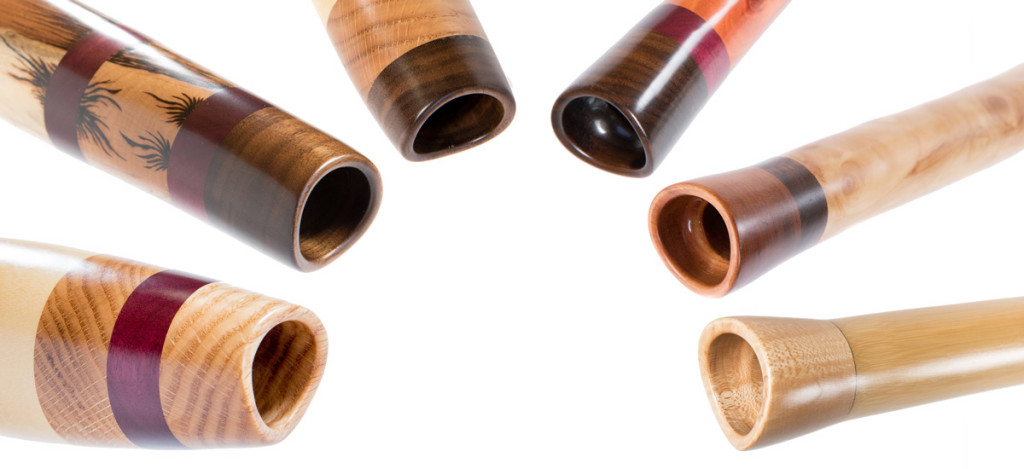
Multidrone Mouthpiece: An oval shaped opening with a concave face for comfort and seal, designed by William Thoren. Mouthpieces range from cup shaped,(for tight bores) and open chamber (for big bores).
—————-
For the latest multidrone instructional videos, check out
WET Didgeridoo Tutorials: https://wetdidgeridoo.teachable.com

Below are several out-dated videos made about playing the basics of Multidrone. Stay tuned for more up to date content.
Multidrone
This technique expands upon the drop octave technique to play more than just one or two extra drone notes.
Advanced Lip Control
This Is REALLY the heart of the multidrone technique. Developing this will enable you to transform your relationship to back pressure. The source of the drone becomes not dependent on the didge but solely on your lips. this means your lips can play didge rhythms without a didge. Enjoy! You can never drool on your hands TOO much…..
Applying Advanced Lip Control to the Didge
This shows you how to take the technique above and apply it to a Multi Drone didgeridoo.
Ben Malcolm Teaches the Multi Drone Lip Pulse
This is in some ways, what could be considered a form of multidrone “wobble”.